 Kevin Raleigh
I’ve always felt that avoiding injuries was a key component to getting – and staying fit. The nagging muscle pull that keeps you from training or, worse yet, that tendon injury that requires long-term rehabilitation. Injuries require time off and, with that, you are back to square one.
As a result, I’ve always tried to be consistent and careful with my training. High reps, low impact, and if something doesn’t feel right, I back off immediately. I don’t push the extra weight or sets, and I don’t skip scheduled off days.
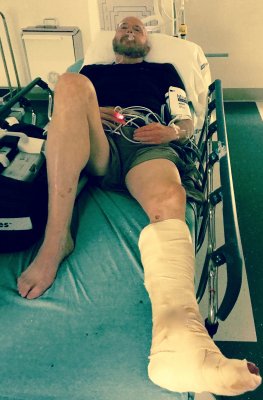
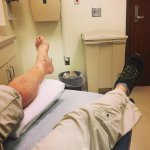
The emergency room
This philosophy has allowed me to train religiously for the past 40 years. Very few injuries mean very little off time, which equals staying in top-notch shape.
Climbing, however, has been a challenge to that philosophy.
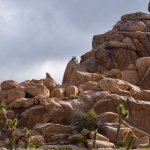
Last week, while bouldering (climbing shorter walls with no ropes) at my local climbing gym, I took a fall off the top of the wall and broke my ankle. My first broken bone in 65 years of life.
It was a fall I’d taken 100 times before, but this time, a simple twist at the bottom snapped the bone. This was my second climbing injury in the past year, the first being a tendon injury in my finger that took three months to heal.
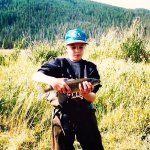
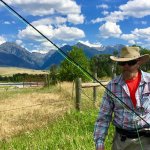
Okay, I know what your thinking. QUIT CLIMBIMG. The problem is I love doing it. And by varying my physical activates – climbing, hiking, fly fishing, running, biking – I have kept my training engaging, which allows me to stay at it.
So laying here with my cast on I’m taking an accounting of the situation. As a side note, I’ve already started light training – upper body, simple leg exercises, and aerobics using an upper body ergometer (a hand bike).

Upper body ergometer (a hand bike)
On the positive side, and I make this next statement in all modesty and with no egotistical intent, along with a healthy diet, the activities that I love to do have kept me incredibly healthy. I can’t tell you how many times I have been in a doctors office and the doctor looks at my chart, then at me, and says, good for you, you are physically 20 years younger then your actual age.

Before the fall
It takes work and consistency to accomplish that and, the truth is, many people just get bored trying to stay fit. Just going to a yoga class, or the same gym six days a week, gets old fast. Which is why I chose to do most of my training in the great outdoors or at the climbing gym. I also try to vary my activities as much as possible.
Now to the negative. There is no way around it, climbing can be dangerous. But it’s so much fun! Climbing requires strength, balance and intense mental focus. I could describe it as a combined mediation and a hard physical work out. Physical chess. And did I mention how much fun it is?
I asked my surgeon if she thought I would have still suffered this injury if I were 25 instead of 65, and she said that there was no way to know for sure, but because of the angle at which I hit the ground, it probably would have happened no matter how old I was.

One legged plank – a bit more difficult
So I’ve decided on a compromise. Regarding climbing, I’m not going to keep doing the same thing and expect a different result. I am going to keep climbing (once the doctor clears me of course), but I will no longer do bouldering, which is inherently more dangerous. Only top roping and lead climbing from now on. I believe that will mitigate the risk of injury but will keep my training, and more importantly, my life, fun.
An important part of my recovery process has been to immediately start planning our next adventures. Consulting with my medical advisors, I’m trying to find the earliest window to rebook our trip to Banff, which was scheduled three weeks post injury and obviously had to be cancelled.

Making plans for the next adventure
We are also exploring trips to New Zealand and Iceland. Planning these trips helps me to keep a positive, healthy attitude – which is not only crucial to a speedy recovery, but also appreciated by those around me.
Can’t wait to get back to Rocking Outdoors. One week down.
Article and photos: Kevin Raleigh, age 60+